Best Self-Propelled Gas Push Lawn Mower for Efficient Yard Care
Answer: For Americans seeking powerful, easy mowing on varied terrain, a self-propelled gas push lawn mower delivers consistent performance with less effort. The top picks below are suited for medium to large yards, slopes, and tough grass. The list highlights models ideal for different needs, from heavy-duty mulching to simple side-discharge tasks.
Buyer type highlights:
– Best for hills and thick grass: models with strong engines and self-propelled drive.
– Best for frequent mulching: units offering 3- or 4-in-1 cutting options.
– Best for budget-minded buyers: reliable 4-stroke engines with straightforward operation.
– Best for small to mid yards: lighter-weight, easy-push designs with simple start systems.
| Product | Type/Drive | Key Feature |
|---|---|---|
| 21” Self Propelled Lawn Mower Gas, 170CC 4-in-1 | Self-propelled with 4-in-1 cutting | 7-position height; large grass bag; versatile discharge options |
| PowerSmart 21-Inch 3-in-1 Gas | Rear-wheel drive, 3-in-1 | 170cc OHV engine; wide 21″ deck; easy mode switching |
| YARDMAX 22 in. 201cc | Self-propelled with CVT, 6 speeds | Heavy traction tires, precise pace control |
| SENIX 21-Inch Gas Lawn Mower (FWD) | Push mower, 1/3 acre suitability | 170cc engine; 3-in-1 cut; 6-position height |
| SENIX 21” Self-Propelled Gas Lawn Mower | Self-propelled with FWD | 3-in-1 cut; 6-position height; 1.7 bushel bag |
21” Self Propelled Lawn Mower Gas, 170CC 4-in-1

Best for: homeowners with sloped yards and thick grass who want flexibility in cutting options. This model offers mulching, rear bagging, side discharge, and rear discharge to adapt to grass conditions. The engine is a 170cc OHV with self-propelled drive for easier mowing on uneven terrain. A large 65L/17.5 gal bag reduces interruptions. Caution: weight and gas dependency may be a consideration in tight spaces.
PowerSmart 21-Inch 3-in-1 Gas Self-Propelled Lawn Mower
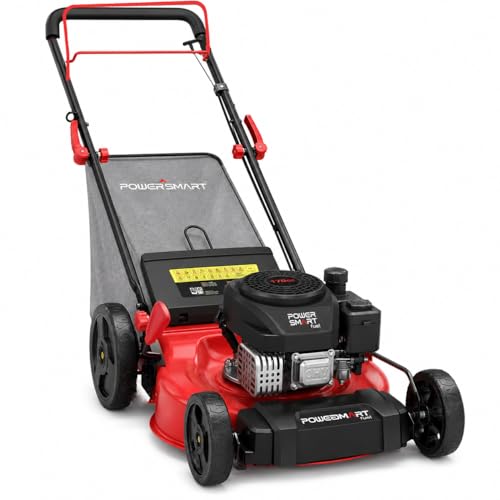
Best for: medium to large yards needing efficient coverage with simple 3-in-1 versatility. The 170cc OHV engine provides dependable power, and the 21-inch steel deck offers a wide mowing path. It supports bagging, mulching, and rear discharge to suit season and grass type. Caution: not specifically labeled as self-propelled in all listings; verify drive option before purchasing if self-propulsion is required.
YARDMAX 22 in. 201cc Select PACE 6 Speed
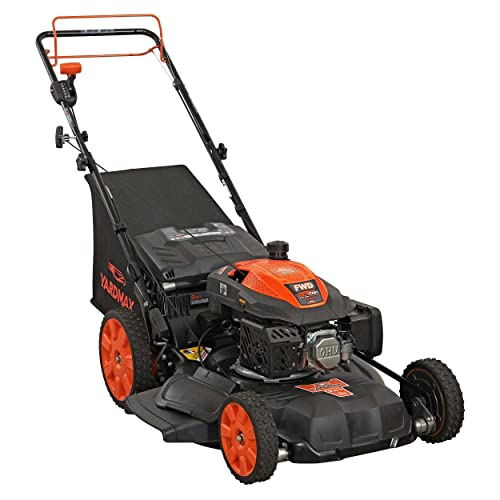
Best for: buyers needing precise pace control over varied terrain. The CVT with six speeds adjusts to walking pace, enhancing comfort on slopes and long sessions. Traction tires improve stability in loose or uneven ground. Caution: heavier deck and engine size may require more storage space and maintenance awareness.
SENIX Lawn Mower, 20″ 144 cc Push

Best for: small yards with tight spaces where a push mower is sufficient. 144cc engine provides adequate power for light-to-moderate mowing. The 20-inch cut width improves efficiency on narrow lawns. Caution: no self-propel feature, so it requires more manual effort on slopes or tall grass.
SENIX 21-Inch Gas Lawn Mower (FWD), 170 cc
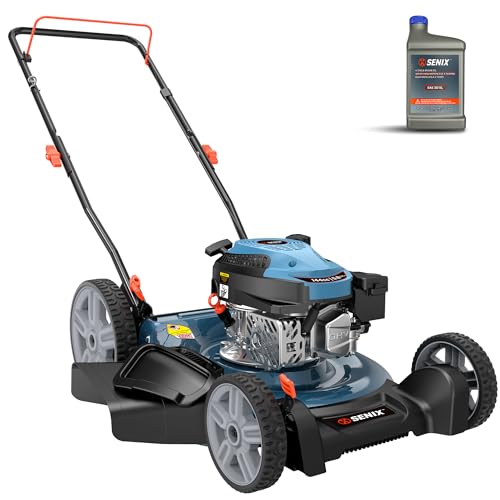
Best for: mid-to-large yards that benefit from a self-propelled design with a strong 170cc engine. The 3-in-1 system supports mulching, bagging, and side discharge, and the 6-position height adjustment covers a wide range of grass conditions. Caution: some users may prefer larger bag capacity for very large properties.
SENIX 21” Self-Propelled Gas Lawn Mower (FWD)

Best for: homeowners with larger properties who want efficient mowing with reliable power. The 170cc engine, self-propelled forward drive, and 3-in-1 cutting system offer versatility for bagging, mulching, or side discharge. The 1.7 bushel bag provides balanced collection and ease of use. Caution: ensure sufficient yard space to leverage the self-propelled drive fully.
Buying Guide
- Engine power and durability: Look for 144cc–170cc OHV engines for steady performance, especially on thick grass or slopes.
- Drive type: Self-propelled offers easier mowing on uneven terrain; push mowers are simple and lighter for small, flat areas.
- Cutting width and deck material: Larger widths (21”–22”) cover more ground; steel decks tend to be durable for long-term use.
- Cutting options: 2-in-1, 3-in-1, or 4-in-1 systems provide mulching, bagging, and side/rear discharge; select based on lawn needs and composting plans.
- Weight and maneuverability: Check wheel size and overall weight for easy handling on slopes and around obstacles.
- Bag capacity: Larger bags reduce frequency of emptying but add weight; balance with storage space and yard size.
- Maintenance: Recoil starting, oil type, and routine lubrication influence long-term reliability; consider models with easy access panels.
FAQ
- What is the difference between 2-in-1 and 3-in-1 mowers?
2-in-1 mowers offer mulching and discharge options; 3-in-1 adds rear bagging for collecting clippings. - Do I need a self-propelled mower for small yards?
Not necessarily; push mowers work well for small, flat lawns and can be cheaper and lighter. - Which features improve mowing on slopes?
Self-propelled drive, larger rear wheels, and a sturdy deck help maintains traction and posture while mowing uphill. - Should I prefer a 21-inch deck over a 22-inch deck?
A 22-inch deck covers more ground per pass, which can reduce mowing time on larger lawns; 21-inch decks are more maneuverable in tight spaces. - How important is bag capacity?
For frequent mowing or larger properties, a larger bag reduces trips to empty clippings; for smaller yards, a smaller bag may suffice. - What maintenance is required for gas mowers?
Regular oil checks, air filter cleaning, spark plug inspection, and blade sharpening help maintain peak performance.