Best Lawn Weed Sprays for a Healthier Lawn
The following lawn weed sprays are among the most commonly recommended products for homeowners seeking quick, effective weed control without harming the turf. Each option targets common weeds such as dandelion, clover, crabgrass, and chickweed, while supporting lawn health when used as directed. Read through product highlights, compare their weed-killing power and balance with fertilization, and choose the spray that fits your grass type and maintenance goals.
| Product | Brand | Notes |
|---|---|---|
| Ortho WeedClear Lawn Weed Killer Ready-To-Spray | Ortho | Fast-acting, handles listed lawn weeds down to the root. |
| Spectracide Weed & Feed 20-0-0 | Spectracide | Dual-action formula feeds lawn while killing broadleaf weeds. |
| Scotts Liquid Turf Builder with Plus 2 Weed Control | Scotts | Kills weeds and provides nitrogen for greening. |
| Ortho WeedClear Weed Killer for Lawns with Comfort Wand | Ortho | Wide weed kill list with a comfortable wand for precise application. |
| Chapin USA Pump Sprayer | Chapin International | Sprayer tool to apply weed killers, fertilizers, and other liquids. |
Ortho WeedClear Lawn Weed Killer Ready-To-Spray

Ortho WeedClear Lawn Weed Killer Ready-To-Spray targets lawn weeds with a fast-acting formulation designed to work down to the root. It claims effectiveness against crabgrass, dandelion, clover, chickweed, foxtail, and other listed weeds when applied as directed. The product is created to be safe for various lawn grasses, including Bermudagrass, Buffalograss, Fescues, Kentucky Bluegrass, Ryegrass, and Zoysiagrass, provided the directions are followed. This broad-spectrum herbicide emphasizes a straightforward, single-application approach suitable for homeowners seeking quick results without complex timing.
Key features include root-level weed kill, compatibility with multiple turf types, and a spray format designed for easy application. While the label notes it won’t harm lawn grasses when used as directed, it is essential to correctly identify target weeds and apply under appropriate weather conditions to avoid scorching or runoff. The product is well-suited for lawns facing common broadleaf and some grassy weeds and offers a practical option for mid-season weed control.
Spectracide Weed & Feed 20-0-0 (Ready-to-Spray)
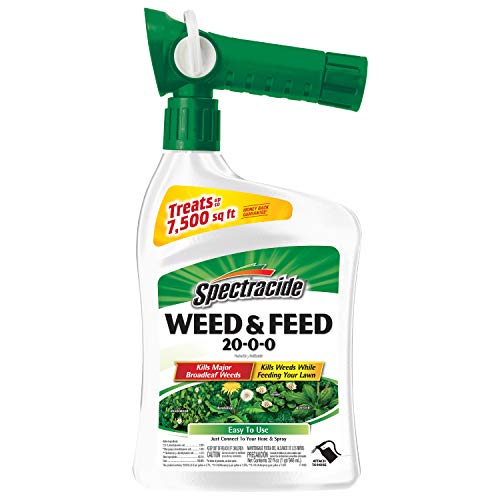
Spectracide Weed & Feed combines weed control with lawn feeding in a dual-action formula. The 20% nitrogen content helps promote lawn growth while targeting broadleaf weeds such as dandelion, chickweed, knotweed, plantain, clover, mallow, purslane, and other listed weeds. This approach can simplify lawn care by reducing the need for separate fertilization and weed control applications. Correct timing—particularly during active weed growth—and following label directions are critical for maximizing results and avoiding damage to desirable grasses.
Its dual action makes it a convenient option for homeowners who want to both eliminate visible weeds and nourish their turf. The ready-to-spray format further reduces preparation steps, aiding consistent coverage across the lawn. As with all lawn sprays, avoid application during extreme heat, drought, or windy days to minimize drift and ensure even distribution.
Scotts Liquid Turf Builder with Plus 2 Weed Control

Scotts Liquid Turf Builder with Plus 2 Weed Control combines weed management with nitrogen fertilizer in a ready-to-spray formula. It targets weeds such as dandelion, clover, ground ivy, henbit, chickweed, plantain, and other broadleaf species listed on the label, while supplying nutrients to help promote turf greening. This product is particularly useful during active weed growth periods when lawns can convert nutrients into rapid top-growth and improved color. Applicators should ensure even coverage and apply only to actively growing weeds for best results.
Assessment of this option should consider the lawn’s current nutrient needs and the potential for rapid greening, which can influence mowing schedules and overall maintenance. The spray method supports uniform distribution, but over-application or improper dilution may lead to leaf burn or unwanted growth in sensitive grasses. Always follow label directions for best outcomes and to protect beneficial soil biology.
Ortho WeedClear Weed Killer for Lawns with Comfort Wand

Ortho WeedClear Weed Killer for Lawns with Comfort Wand is designed to kill more than 250 listed weeds, including dandelion and clover, down to the root while aiming to spare the lawn when used as directed. Its wand is built for user comfort and precision, allowing targeted treatment or broader coverage as needed. This product emphasizes a rapid kill on a wide weed spectrum, with spot treatment capabilities for driveway edges or areas where lawn integrity matters.
The label indicates compatibility with many common turf types, including St. Augustinegrass (excluding Floratam), Bermudagrass, Centipedegrass, Zoysiagrass, Buffalograss, Bahiagrass, Kentucky Bluegrass, Ryegrass, Tall Fescue, and Fine Fescue. As with other lawn sprays, following application timing, weather conditions, and dilution guidelines is essential to protect desirable grasses and minimize off-target effects. The wide weed spectrum can be advantageous for lawns facing diverse weed pressure across seasons.
Chapin USA Pump Sprayer, 2 Gallon

Chapin USA Pump Sprayer provides a versatile tool to apply lawn and garden chemicals, including weed killers, fertilizers, and pesticides. Its 2-gallon translucent tank helps monitor solution levels, and a squeeze handle with a comfortable grip supports extended spraying sessions. Anti-clog filter components reduce interruptions from debris, while the 12-inch wand and 34-inch hose offer reach for efficient coverage around beds, under shrubs, and across larger lawns. This tool is suitable for DIY weed control programs and is adaptable to a broad range of liquids beyond herbicides.
Practical use involves proper cleaning after each spray, using compatible cleaners to prevent residue buildup, and storing the sprayer away from extreme temperatures. The unit pairs well with compatible lawn weed formulas and can be a long-term investment for homeowners who regularly apply herbicides, pesticides, or liquid fertilizers. The combination of reliability and ease of use makes it a common choice for ongoing lawn care routines.
Buying Guide: Key Considerations for Lawn Weed Sprays
- Weed spectrum: Review which weeds are listed as controlled on the label (broadleaf vs grassy weeds) and ensure they align with your lawn’s dominant weed types.
- Lawn type compatibility: Check the grass varieties listed as safe to treat (e.g., Kentucky Bluegrass, Bermudagrass, St. Augustinegrass) to prevent turf damage.
- Active ingredients and safety: Understand the active compounds and any use restrictions for pets, children, or seasonal weather conditions; avoid spraying during extreme heat or drought.
- Application method: Consider ready-to-spray formats for convenience or use spray equipment like a pump sprayer for larger areas or precise spot treatment.
- Carrier and coverage: Evaluate coverage per bottle or per gallon, ensuring the product can realistically treat your lawn size without waste.
- Nutrition synergy: Some formulas include fertilizer (weed-and-feed), which can promote quick greening but may require adjusted mowing and watering schedules.
- Environmental impact: Be mindful of runoff potential toward sidewalks, driveways, and nearby water sources; follow buffer recommendations on the label.
- Re-entry and safety: Note any waiting periods before children or pets re-enter the treated area and how to store unused product safely.
- Equipment compatibility: If using a sprayer, confirm nozzle type and dilution requirements to achieve even coverage and minimize drift.
Choosing the right lawn weed spray involves balancing weed control strength, turf safety, ease of application, and maintenance goals. For larger lawns, a combination approach—weed control with occasional fertilization—may optimize both weed suppression and turf vigor. Always adhere to the product label for mixing ratios, timing, and application windows to achieve the best long-term results for American lawns.