Best in-Ground Pool Alarms: Safer Summers With Smart Water-Safety Monitors
Answering the need for constant pool safety, these in-ground pool alarms help detect water entry quickly and clearly. They’re best for households with kids, pets, or frequent guests, and for owners who want reliable, alert-based safety without heavy installation. The top picks below cover a range of features from advanced wave-sensing to app connectivity, so you can choose the model that fits your pool size, maintenance routine, and smart-home setup. The quick-reference table summarizes each option to aid comparison at a glance.
| Product | Best For | Key Feature |
|---|---|---|
| ZEPLIHS Pool Alarm | Smart homes and busy households | Smart wave-sensing with 110dB alarm, IP68 waterproof |
| PoolGuard PGRM-2 | Simple, reliable US-made option | ASTM F2208 certified; 85dB horn; remote receiver |
| PA-30 Pool Patrol | Budget-friendly, easy setup | ASTM F2208 tested; adjustable sensitivity |
| BCONE Lifebuoy | Smart-home integration lovers | 2.4GHz Wi‑Fi; Alexa/Google Assistant; app control |
| ZapWay Pool Alarm | Indoor alert lovers | 110dB dual sirens; adjustable sensitivity |
ZEPLIHS Pool Alarm: Wave-Sensing Safety
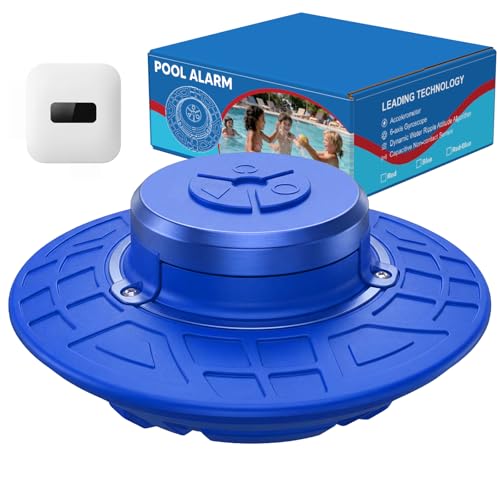
The ZEPLIHS Pool Alarm uses smart wave-sensing technology to distinguish real water entry from wind or rain disturbances. Best for busy homes with kids or pets, this model triggers a high 110dB alert instantly when water is detected, ensuring you hear it from anywhere in the house. It’s designed with an IP68 waterproof seal and non-contact capacitive sensors to stay dry inside after months of use, supporting multiple swimming seasons. A potential limitation is that power needs and sensor maintenance should be monitored for long-term reliability in extreme weather.
Why this is best for: Families needing reliable, loud alerts coupled with smart disturbance filtering. The device’s waterproof design makes it suitable for harsh conditions and extended outdoor use.
PoolGuard PGRM-2 In-Ground Pool Alarm

This model is NSF-certified to ASTM F2208 standards, reflecting a tested level of reliability. It includes an in-house remote receiver with a range up to 200 feet and alarms at 85dB at 10 feet, making it suitable for mid-sized pools and homes with multiple living spaces. Best for owners who want a straightforward, domestically produced system with a dedicated receiver housed near the main living areas. A limitation is the potential for higher installation effort if the remote receiver needs repositioning for optimal signal coverage.
Best for: Homeowners seeking a certified, straightforward alarm with a robust remote receiver and clear, audible alerts.
PA-30 Pool Patrol: Easy Install and Clear Alerts

The Pool Patrol PA-30 emphasizes easy installation and adjustable sensitivity. It’s independently tested to ASTM F2208 standards, offering reliability without complex wiring or modifications. The unit emits an 85+dB alert at 10 feet, designed to cover pools up to 20 by 40 feet. This is a practical option for smaller to mid-sized residential settings. One caveat is that larger pool configurations may require multiple units to ensure complete coverage.
Best for: Homeowners who want a ready-to-deploy, code-compliant alarm that’s simple to install and adjust.
BCONE Lifebuoy Pool Alarm: Smart Home Connected

The Lifebuoy BCONE alarm stands out for smart-home compatibility. It connects to Alexa and Google Assistant and uses a smartphone app for full control, even when you’re away. The device promises an advanced algorithm to prevent false alerts and includes a powerful dual-loud alarm. It supports multiple pool units connected to a single home unit, making it suitable for larger properties or multiple water features. A potential drawback is dependence on home Wi‑Fi stability for uninterrupted app-based monitoring.
Best for: Tech-forward homes that want centralized control and voice assistant integration for pool safety.
ZapWay Pool Alarm With Indoor Receiver

The ZapWay alarm provides a dual 110dB siren that sounds both the pool and indoor unit upon water entry, ensuring audible alerts inside the home. It is designed for all pool types and supports up to 20 by 40 feet, with adjustable sensitivity to reduce false alarms from wind or pool cleaners. It is battery-powered, offering easy placement without wiring. The limitation is that battery life varies with usage and higher sensitivity can drain batteries faster.
Best for: Homes prioritizing strong indoor alerts and a simple, battery-powered setup for quick deployment.
Buying Guide: How to Choose the Right In-Ground Pool Alarm
Key questions to guide your decision:
- How large is your pool and property, and do you need coverage for multiple water features?
- Do you want a wired or wireless solution, and is easy installation a priority?
- Is smart-home integration important (voice assistants, mobile app control) for you?
- Do you prefer a model with a remote receiver or standalone in-pool unit?
- What level of alarm loudness is appropriate for your living space?
Guidance by scenario:
- Best overall performance: A model with smart wave-sensing, strong water-entry detection, and IP-rated waterproofing. Look for devices with anti-false-alarm features and robust durability for outdoor use.
- Best for smart homes: Choose an alarm with app connectivity and voice assistant compatibility to centralize safety alerts.
- Best for easy installation: Systems that require no drilling and provide straightforward setup with adjustable sensitivity are ideal.
- Best for multi-pool setups: A solution that supports multiple pool units connected to a single home unit expands coverage efficiently.
- Best for indoor reassurance: If indoor alert visibility matters, models with strong indoor receivers or dual sirens can ensure you hear alerts even when indoors.
Frequently Asked Questions
- What is the typical loudness of pool alarms? Some alarms emit 85–110 decibels at certain distances, designed to wake you or alert you from a distance.
- Do these alarms work on all pool types? Most models target inground, above-ground, and soft-sided pools, but verify compatibility with your pool type and size.
- Can these alarms prevent drowning? They are safety aids that alert you to water entry; they should complement active supervision and other safety measures.
- Is Wi‑Fi required for smart alarms? Some models require Wi‑Fi for app features, while others operate as standalone units.
- Do pool alarms require installation modifications? Many systems are designed for no-drill installation, but some models need mounting hardware or surfaces for secure placement.
- How often should I replace the battery or maintain the unit? Battery-powered models typically include a low-battery indicator; follow the manufacturer’s maintenance guidance for best results.