Best Golf Cart Propane Heaters for Cold-Day Rides and Outdoor Courses
When you’re hitting the links on chilly mornings or late-season rounds, a propane-powered golf cart heater can make a big difference. This guide highlights five reliable options to help you stay warm without sacrificing space or cart usability. Best for golfers who want portability, quick heat, and cup-holder compatibility, these selections balance output, ease of use, and durability for outdoor environments.
Buyer tips: consider BTU output, fuel type (1 lb cylinders vs integrated bases), ignition reliability, and portability. The following picks are ideal for different needs—compact warmth on the go, higher heat for longer sessions, and models that fit standard golf cart cup holders or accessory mounts. A quick comparison helps tailor your choice to your climate and cart model.
| Product | Best For | Main Feature | BTU |
|---|---|---|---|
| Mr. Heater Golf Cart 4,000 BTU | Warmth on mild chilly days | Compact radiant heat with 1 lb propane cylinder | 4,000 |
| SANAUVULCAN 6,800 BTU | Heavier, longer sessions | 2-in-1 cup holder & propane base; USB ignition | 6,800 |
| WADEO Golf Cart Heater 6,200 BTU | Reliable heat in windy conditions | Cup holder adapter; windproof USB lighter | 6,200 |
| KOMAN 4,100 BTU | All-round versatile cart heat | Automatic ignition; adjustable heat | 4,100 |
| Hotdevil 8,520 BTU | Maximum warmth in cold climates | Catalytic burner; robust construction | 8,520 |
Mr. Heater Golf Cart 4,000 BTU Radiant Propane Heater

This compact heater delivers 4,000 BTU per hour and runs on a standard 1 lb propane cylinder. It heats up to about 100 square feet and features a rough terrain resistant tip-switch for safer deployment on uneven ground. Best for golfers who want lightweight warmth for shorter rounds or early-season play. Best for a shopper prioritizing portability and simple operation in mild-to-cool conditions. Caution: ensure proper ventilation and never use indoors.
6800BTU Propane Golf Cart Heater, SANAUVULCAN

Designed for golf courses and outdoor use, this 6,800 BTU heater includes a cup-holder and propane cylinder base. It emphasizes portability, quick mounting, and a cordless design for easy transport to greensides, tee boxes, or camping contexts. Best for golfers who want stronger heat output and a versatile, go-anywhere unit. Choose this if you need reliable warmth during longer cold-weather sessions. Caution: heavier than smaller models, so plan for transportation and storage accordingly.
Golf Cart Heater With Cup Holder & Gas Regulator, WADEO
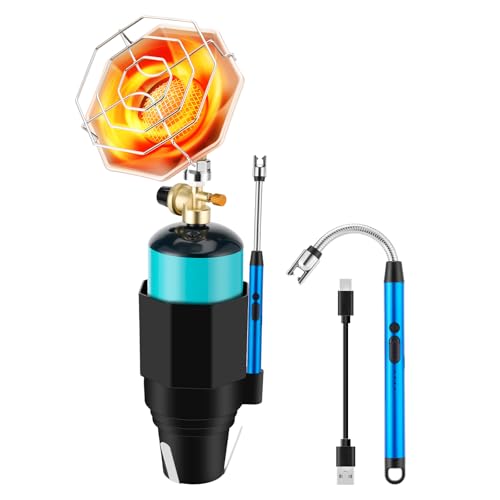
WADEO’s heater offers up to 6,200 BTU with a windproof USB igniter and a cup-holder adapter. Its 2-in-1 design suits golf carts and outdoor camping, delivering quick warmth with a robust build and a durable cup holder. Best for riders who encounter gusty conditions and want a reliable ignition mechanism. Limitation: the 1 lb propane tank is not included, so purchase separately.
KOMAN Golf Cart Heater, 4,100 BTU

KOMAN’s model provides 4,100 BTU of warmth with automatic ignition and adjustable heat output. It’s designed for compatibility with most golf carts and includes a cup holder adapter for secure mounting. Best for golfers who want a dependable, compact unit with adjustable heat. Limitation: fuel tank not included, so factor in an accompanying propane cylinder purchase.
Hotdevil Golf Cart Heater, 8,520 BTU

Hotdevil offers a high-output option with 8,520 BTU and a durable catalytic burner for efficient combustion and resilience in windy conditions. It’s designed for all golf carts and features a cup-holder adapter for easy mounting. Best for golfers in very cold climates seeking maximum warmth. Limitation: higher heat output may require careful handling and appropriate venting to avoid overheating nearby gear.
Buying Guide
- How much heat do you need? If you play in cold climates or long rounds, higher BTU units (6,000–8,500 BTU) provide more consistent warmth. For milder days, 4,000 BTU might be sufficient.
- How will you mount it? Look for cup-holder adapters or base stands that fit your cart model. 2-in-1 cup holder and base designs offer flexible placement on carts or on tents and shelters.
- Ignition type matters. USB or battery-assisted ignition improves reliability in damp or cold conditions. Automatic ignition reduces the need for matches or lighters.
- Fuel considerations. Most units assume 1 lb propane cylinders; check if tanks are included. Also verify valve tightening and stability for outdoor use.
- Portability vs. durability. Lighter units excel on short rounds; heavier, rugged models excel in rugged outdoor settings and long golf trips.
- Ventilation and safety. Propane heaters require adequate ventilation to avoid gas buildup. Keep heaters away from flammable materials and always follow manufacturer safety notes.
Frequently Asked Questions
- Can I use these heaters indoors? No. Propane golf cart heaters are designed for outdoor use and should not be operated indoors due to fire and CO risks.
- Do the tanks come with the heaters? Some do not. Many models require a separate 1 lb propane cylinder; always confirm with the product listing.
- Are these heaters compatible with all cart brands? Most models advertise compatibility with EZGO, Club Car, and Yamaha, but check the included cup holder adapter for your specific cart.
- Which heater is best for windy days? Heaters with windproof ignition and robust supports perform better in breezy conditions;Hydrocarbon by Hotdevil and WADEO are examples with additional wind resistance features.
- Is a higher BTU always better? Higher BTU provides more heat and longer heat duration but consumes fuel faster and can be heavier; match BTU to your typical session length and climate.
- What safety precautions should I take? Operate on stable surfaces, keep away from flammable materials, ensure proper ventilation, and inspect for gas leaks before use.